
Alfredo Rios
-
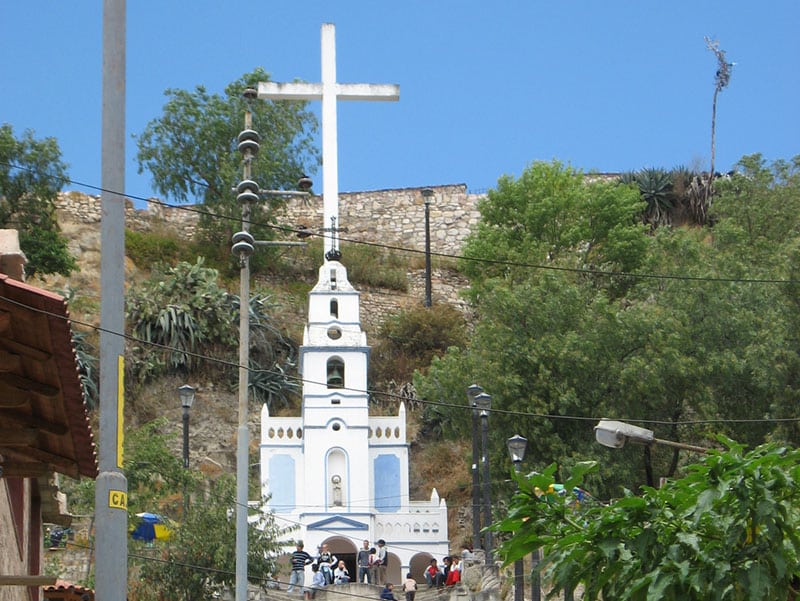
Santa Apolonia Hill
Santa Apolonia hill rises to 2,764 m (9,068 ft) above sea level, only 200 meters from the Plaza de Armas of Cajamarca, and is the city’s natural viewpoint. It is an outcrop of whitish, relatively soft volcanic tuff from the Tertiary period. The earliest occupation of the hill dates from the Torrecitas phase (1200 BC),…
-
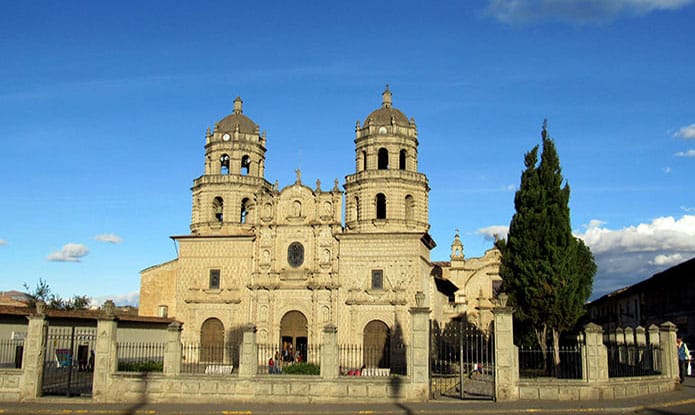
The Church of San Francisco in Cajamarca
It is the most imposing church in Cajamarca. The first building was completed in 1579 and demolished in 1687 to build the present church, which was begun in 1699 under the patronage of Saint Anthony of Padua and took 80 years to complete. The materials were donated by Antonio Astopilco, who thereby earned the right…
-
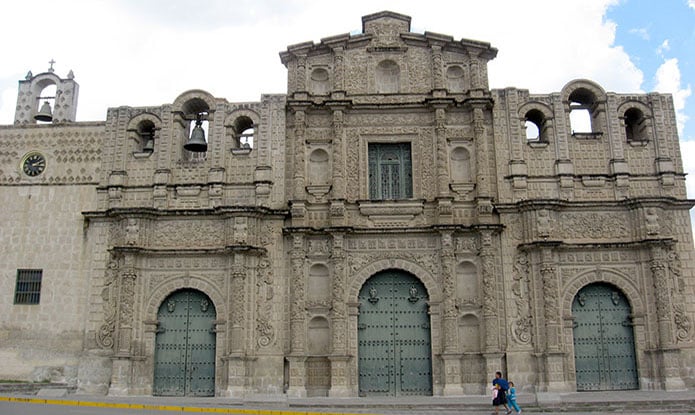
The Cathedral of Cajamarca
It is not as imposing as the church of San Francisco, but it is the most representative church in Cajamarca. It was built in the second half of the 17th century and dedicated to Saint Catherine. It was designed by Juan de Céspedes y Ledesma, who probably also directed the work, and its costs were…
-
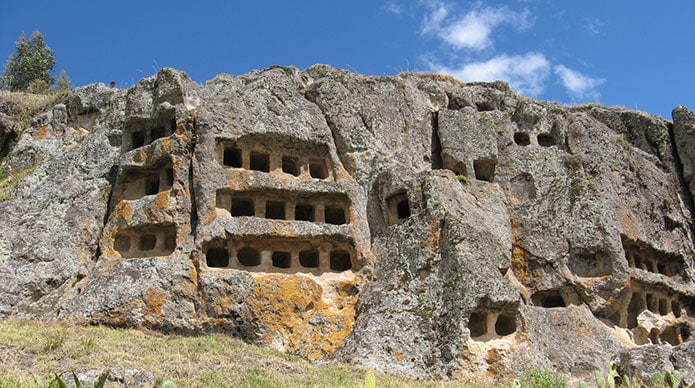
The Ventanillas de Otuzco
The Ventanillas de Otuzco (Windows of Otuzco) are located in the district of Baños del Inca, 7 km from the city of Cajamarca, at 2,900 m (9,510 ft) above sea level. The name “ventanillas” (little windows) comes from their appearance: a group of openings arranged in horizontal and vertical rows, carved into the living rock.…
-
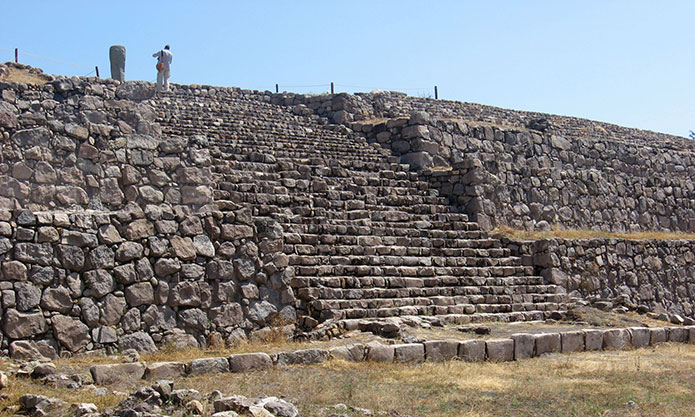
The Temple of Kuntur Wasi
Kuntur Wasi is an archaeological site on La Copa hill in the province of San Pablo, about 115 km from the city of Cajamarca and only 2 km from the town of San Pablo. It was Julio C. Tello who named it Kuntur Wasi (Temple or House of the Condor), after the images of this…
-
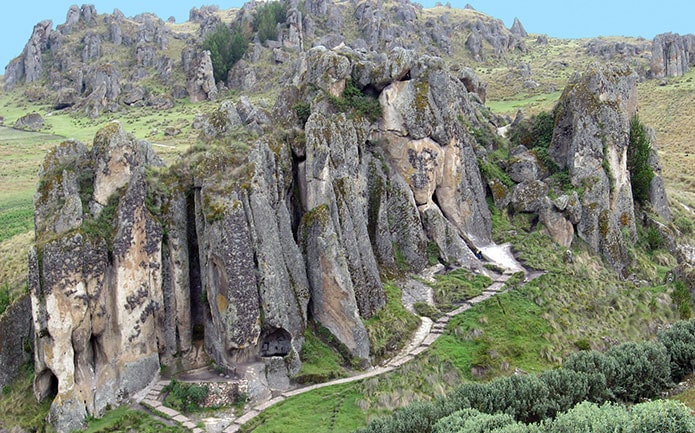
The Cumbemayo Canal
Cumbemayo is located 20 km west of the city of Cajamarca, at 3,500 m (11,480 ft) above sea level. Its name is usually explained as coming from Cumbe, “fine”, and Mayo, “river”, meaning “fine river” in Quechua. The canal was found in 1937 by Ernesto Puente, administrator of the San Cristóbal estate (Chilango valley, near…
-
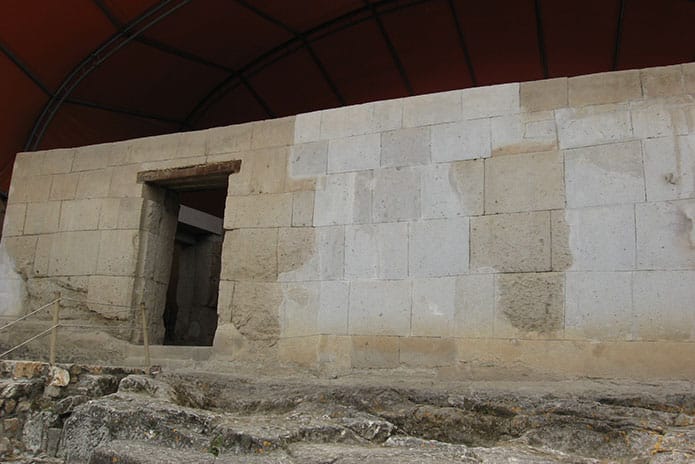
The Ransom Room
The Ransom Room (Cuarto del Rescate) is located in the historic center of Cajamarca, half a block from the Plaza de Armas, at Jr. Amalia Puga 722. It is a rectangular building measuring 11.80 meters long by 7.95 meters wide at its base, and 3.10 meters high on the outside. According to the archaeologist Rogger…
-
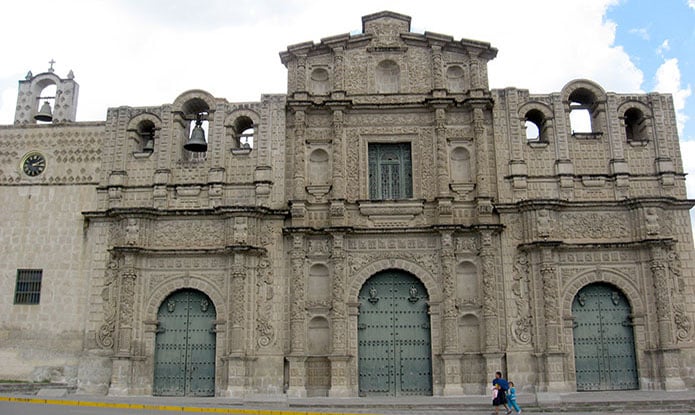
The Belén Religious Complex
This complex is the finest example of colonial art in Cajamarca. It is made up of the Church of Belén, the Men’s Hospital and the Women’s Hospital. Church of Belén The church was built with funds from the corregidor (royal administrator) Francisco de Espinoza. The work was directed by the master builder José de Morales,…
-
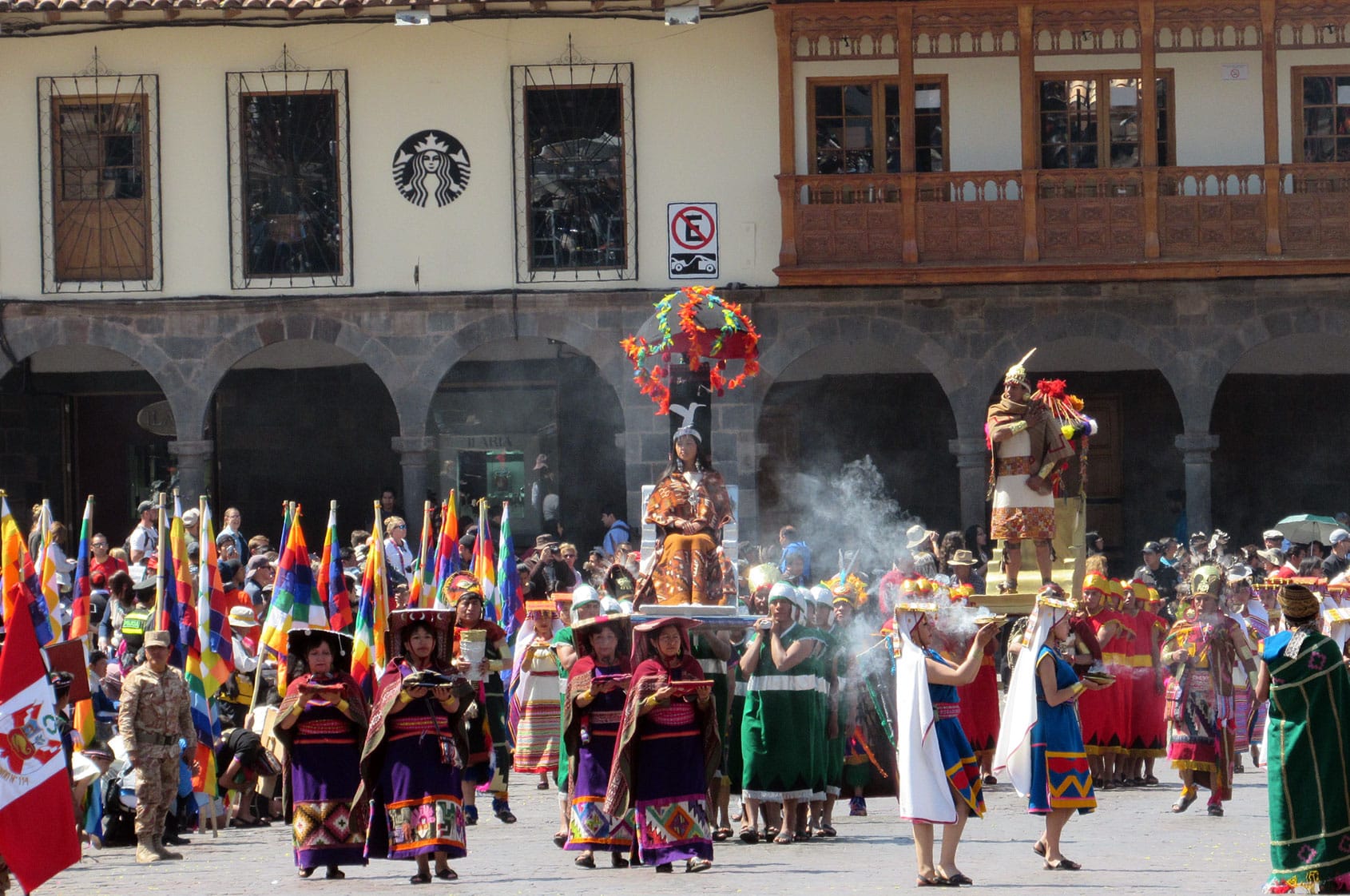
Inti Raymi
Inti Raymi was the Inca festival dedicated to the Sun god. The celebration was revived in Cusco in 1944 and is held every June 24 on the esplanade of Sacsayhuaman. The script was prepared by specialists who tried to remain as faithful as possible to the original. In Inca times, Inti Raymi was preceded by…
-
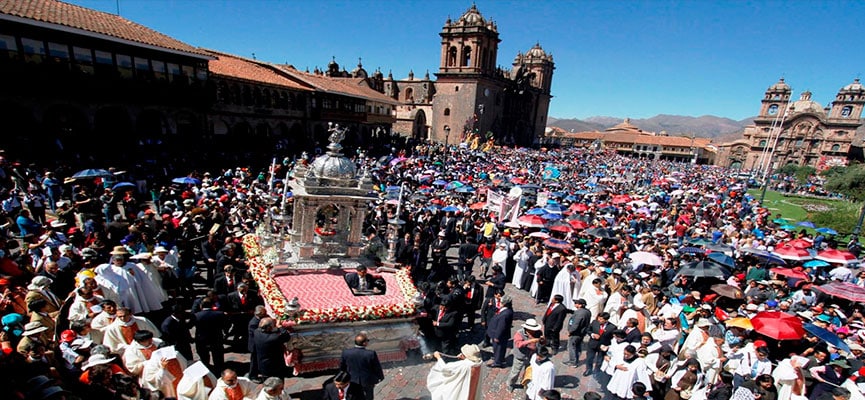
The Corpus Christi Festival
This celebration is dedicated to the Eucharist. It takes place in June, on a movable date. A Papal Bull established it as a major feast in the New World. In colonial times the festival was warmly received by the indigenous population, as it had many similarities with Inca festivals in which the mummies were carried…