
Chachapoyas Info
-
The Chachapoyas Culture
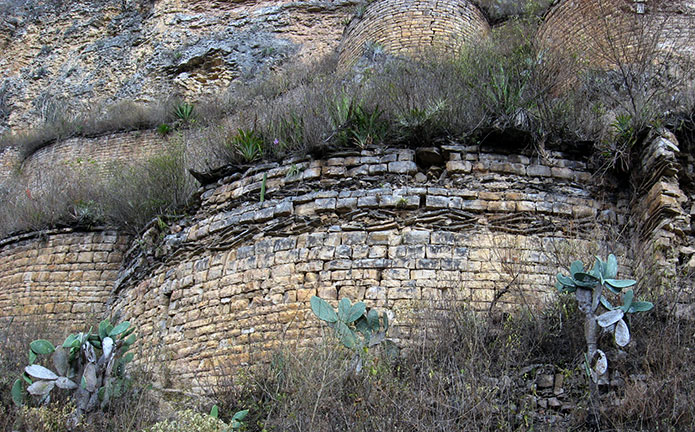
The Chachapoyas were made up of different ethnic groups. The Spanish conquistadors described them as brave warriors, and their women were renowned for their beauty and fair skin. The Incas took many young Chachapoya women to Cusco to serve as concubines of the nobility. Peter Lerche (1986) estimated the population of this culture at 300,000…
-
The Marañón River
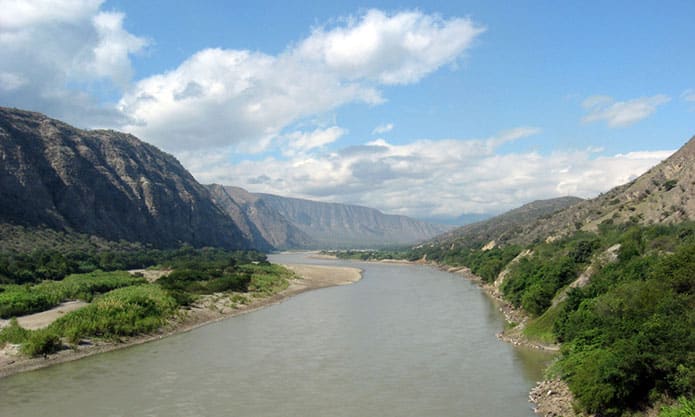
In Inca times it was known as Hatun Mayo, Quechua for “Great River”. Its length has been estimated at 1,800 km, and it is one of the main headwaters of the Amazon. Its confluence with the Ucayali forms the Amazon River. It rises on the Yarupa snow peak (5,800 m above sea level) and takes…
-
Gocta Falls
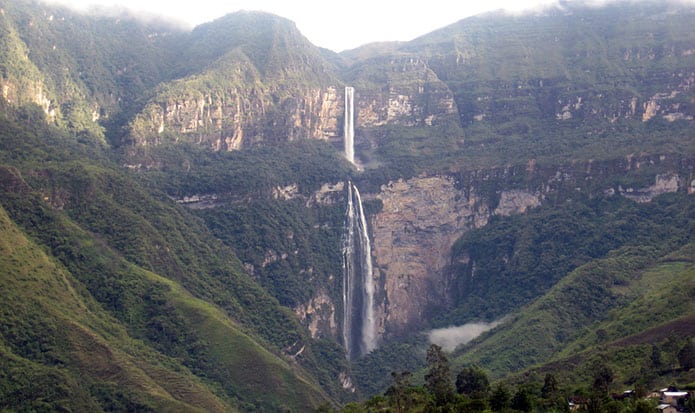
The village name Cocachimba comes from Quechua: Coca (kuka) and Chimba (chimpa), “the other bank”. A chimbador is a man whose job is to guide people across a river, and chimbar (chimbay) means to cross a river, by swimming or by boat, in the Andes and the jungle. When it was announced to the world…
-
The Leymebamba Museum
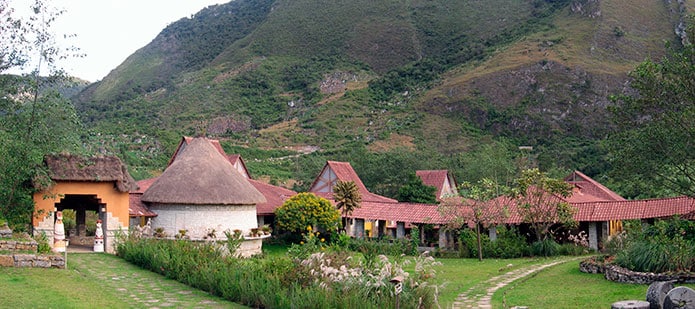
The museum is twenty minutes by car or about forty minutes on foot from Leymebamba. It opened in 2000 and was built thanks to the efforts of Adriana von Hagen and Sonia Guillén (of the Centro Mallqui), who raised part of the funding with the support of friends from Austria. The building draws on local…
-
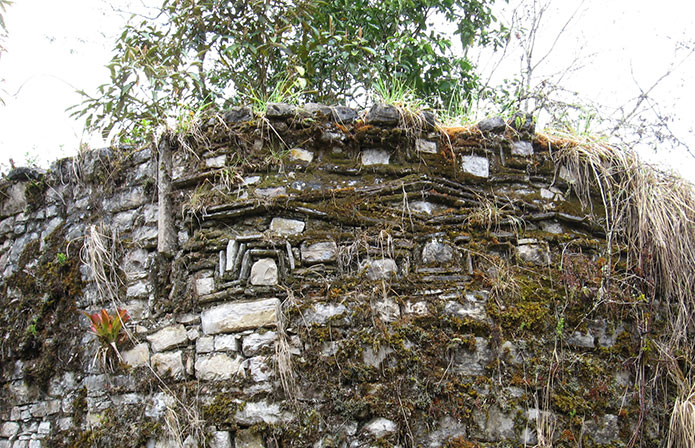
La Congona
La Congona is two hours from Leymebamba on foot or on horseback, as there is no road. It is a Chachapoyas site that has not yet been studied in depth. Its northern part has some 30 circular buildings similar to those of Kuelap, with friezes of stylized waves. These rooms are partly covered by the…
-
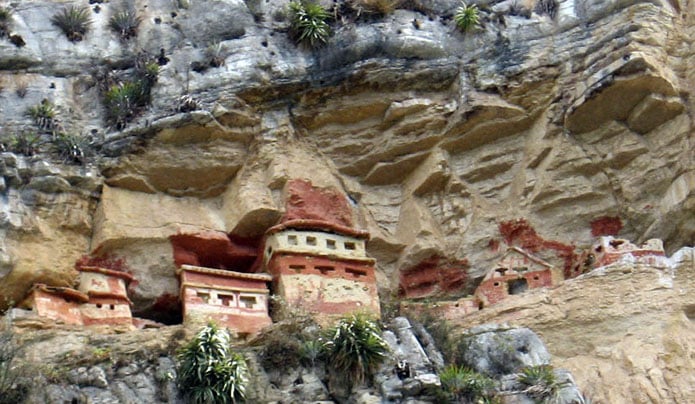
The Mausoleums of Revash
From Hierba Buena it takes 20 minutes by car to reach the start of the trail to the mausoleums. From there you can see the mountain banded with stone of different colors, flat as a wall but hollowed out in places to hold the mausoleums, painted red and cream. The walk is hard, as it…