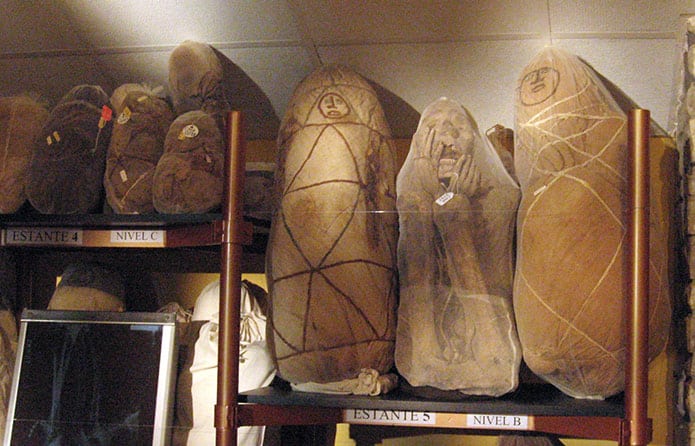
The name “Laguna de los Cóndores” (Lake of the Condors) was given in 1968 by the American explorer Gene Savoy.
The lake is ten hours on horseback from the village of Leymebamba, at 2,600 m (8,530 ft) above sea level, at the source of the Chilchos River. The site became famous for the discovery of mausoleums containing a large number of mummies from Inca times. The first finds were reported in 1996, when a group of local workers found ancient buildings facing the lake and began to loot the site, hoping to find treasure.
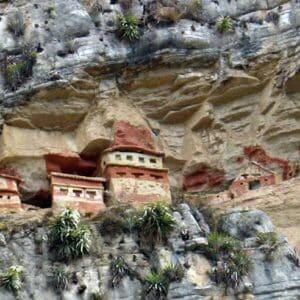
The water of the lake is dark because of decomposing vegetation (tannic acids). The tombs are on a cliff more than 350 meters high. The mausoleums were built of a mix of clay and limestone: six square tombs, all facing the lake. The site has red and yellow paintings with geometric designs and figures of people and animals, probably made by shamans during burial ceremonies under the influence of hallucinogens.
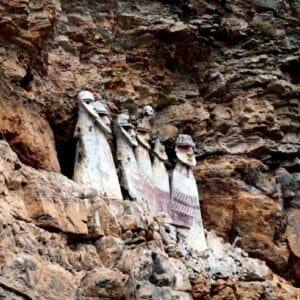
The site dates from AD 800 to 1470. The Chachapoya did not develop mummification: they kept only the bones, after all the soft tissue and organs had decomposed. These bones and remains of hair were wrapped in cloth and placed in baskets.
The Incas removed all the Chachapoya burials from their original places. They built two chulpas (burial towers) where they placed all these remains, some 600 to 1,000 individuals, and the Chachapoya mausoleums were then used for Inca mummies.
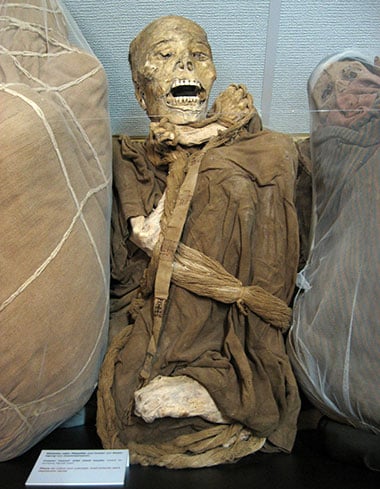
The mummification process. The intestines were removed through the anus, although the other internal organs were kept. The opening was then closed with a cotton plug.
The skin was treated with organic substances that tanned it well. Cotton was used in the face to keep the shape of the nose and cheeks. Finally, the bodies were wrapped in cotton cloth, sometimes with a face embroidered on it.
Those buried here probably belonged to the nobility, possibly from the village of Llaqtacocha facing the lake, where evidence of some 130 houses has been found.
Conical wooden frames were used to carry the mummies. After the burial, offerings were made periodically, as shown by gourds, food remains, carved wooden figures and pottery.
Advertisement