
The struggle for emancipation in Peru began with the rebellion of José Gabriel Condorcanqui, Túpac Amaru II, an indigenous nobleman who rose up against the abuses of the corregidores and the colonial administration. On November 4, 1780, Túpac Amaru II took prisoner the corregidor of the province of Tinta, in Cusco, and shortly afterwards had him executed.
This led to harsh repression by the viceroy. The rebel forces won several victories but were finally defeated in April 1781. Túpac Amaru II was captured and executed, along with members of his family, on May 18, 1781. It is estimated that some one hundred thousand people died in these rebellions.
Despite the indigenous defeat, the rebellion had a great impact on colonial society. Not only indigenous people took part, but also some criollos who had helped finance it, hoping to stop paying taxes to the Spanish Crown. To prevent future uprisings, the hereditary chiefdoms were abolished and replaced by “alcaldes de indios”; Inca dress was forbidden, portraits of the Incas were ordered destroyed, and writings in Quechua were banned.
The arrival of the Argentine general José de San Martín on September 8, 1820 opened a new stage in the struggle for independence. San Martín had come from liberating Chile, having defeated the Spanish army at the Battle of Maipú on April 5, 1818.
San Martín reached Peru with an army of about 4,000 soldiers, which grew as royalist soldiers deserted to join it. In different cities of Peru, supporters of independence organized proclamations.
Viceroy La Serna decided that the best way to hold on to power was to withdraw to the highlands. This left Lima at the mercy of the patriot army, and José de San Martín entered the capital triumphantly in July 1821. Independence was proclaimed on July 28, 1821.
A Protectorate was established as the form of government, headed by San Martín. The Protector’s project was conservative: he hoped to find a European prince to take the throne of Peru.
In July 1822, General San Martín traveled to Guayaquil to meet the Venezuelan general Simón Bolívar. The meeting did not go well for San Martín, who decided to leave Peru on September 20, 1822.
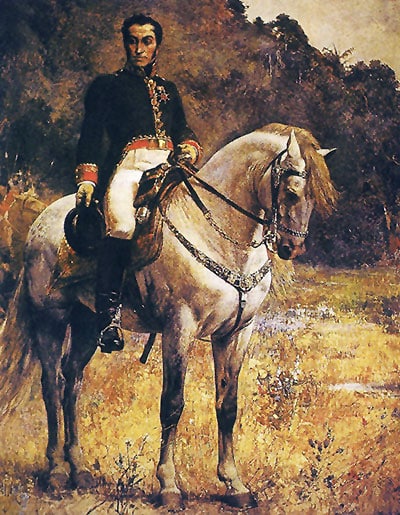
Simón Bolívar arrived in Peru on September 1, 1823. He was the true organizer of the patriot army, which faced its first great test on the plains of Chacamarca, at Junín. There it won its first victory on August 6, 1824, a battle fought entirely with lances and sabers, without a single shot. The Spanish were defeated thanks to the surprise intervention of the cavalry regiment known as the Húsares del Perú.
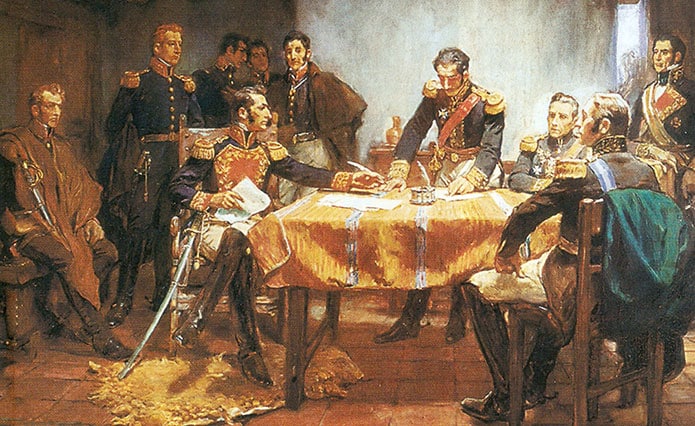
Independence was sealed at Ayacucho, on the Pampa de la Quinua. On the morning of December 9, 1824, the patriot troops under Antonio José de Sucre faced the royalists led by Viceroy La Serna. By about two in the afternoon the patriot victory was complete; the viceroy had been wounded and captured. The capitulation was signed on the battlefield itself, a document that marked the birth of Peru as an independent nation.
Advertisement