
Alfredo Rios
-
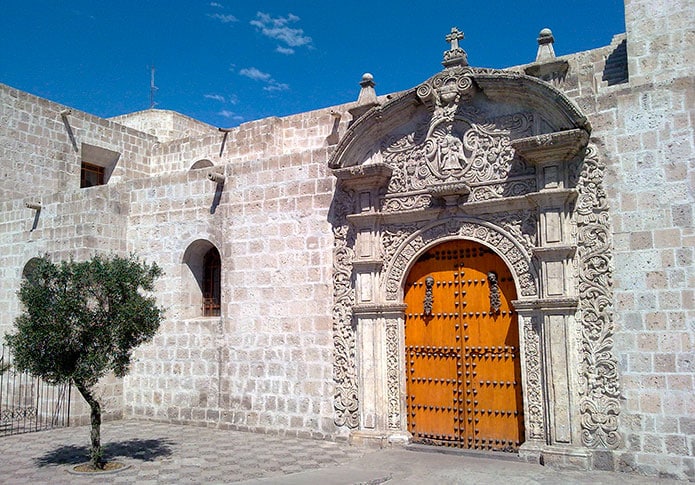
Arequipa: Colonial Houses
CASA DEL MORAL It stands at the corner of Moral and Bolívar streets and takes its name from an old mulberry tree (moral) in its courtyard. Its Baroque portal is carved in sillar with puma heads from whose mouths serpents emerge. The door is decorated with bronze studs, and the house is furnished with colonial…
-
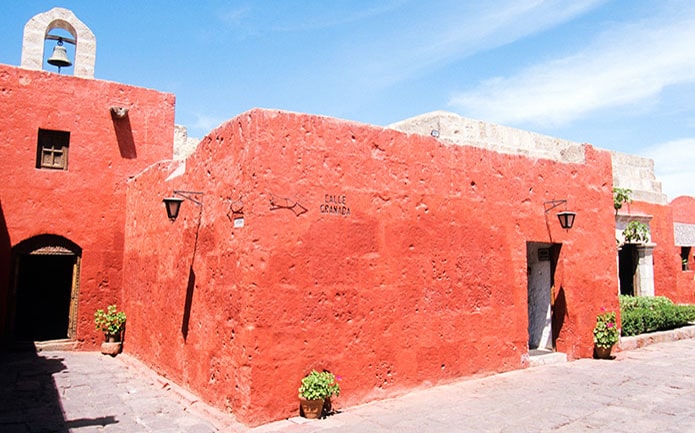
Arequipa: Churches and Convents
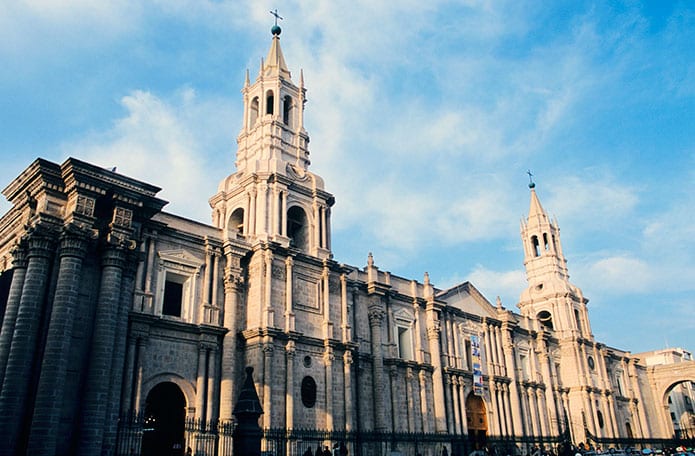
THE CATHEDRAL The first cathedral was designed in the 17th century by Andrés de Espinoza and built between 1621 and 1656 of stone and sillar, with brick Gothic vaults. Damaged by fire and earthquakes, the present building was largely rebuilt in the 19th century. Its façade, flanked by tall towers, is Neo-Renaissance and occupies an…
-
Arequipa: The White City
According to oral tradition, the countryside of Arequipa so impressed the Inca Mayta Cápac that, wanting to give his troops a rest, he exclaimed “Ari, quepay”: “Yes, stay.” From Cusco he later arranged its settlement, sending 3,000 families who established villages throughout the valley. After Diego de Almagro returned from his failed expedition to Chile…
-
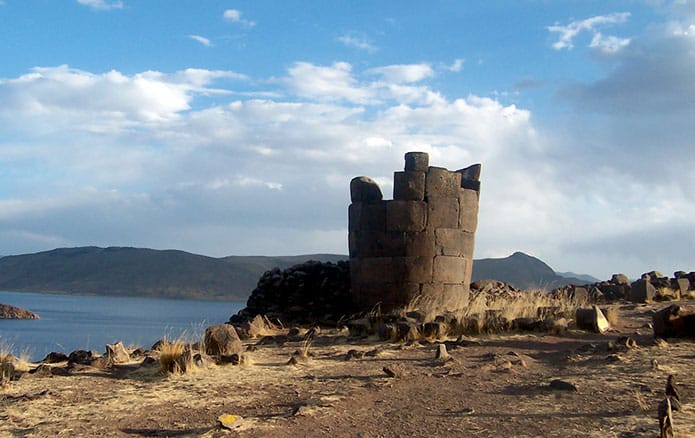
The Chullpas of Sillustani
Sillustani is located about 35 km northwest of Puno. It was where the Colla nobility, and later the Incas, built their funerary towers, known as chullpas. They stand on a plateau about ninety meters above Lake Umayo, whose still waters shine like silver. Chullpas spread across the Altiplano in pre-Inca times. The Collas built them…
-
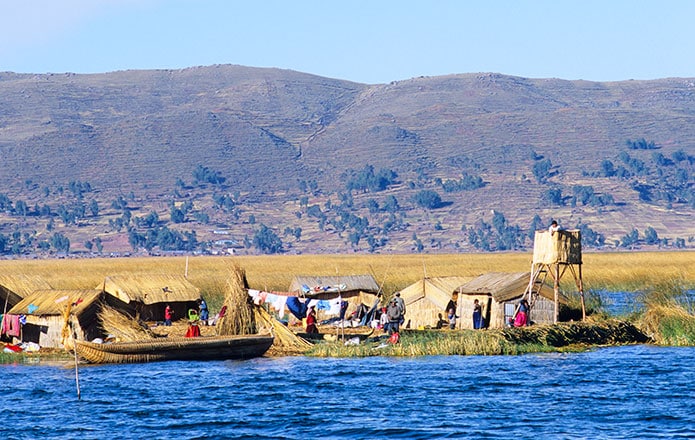
Lake Titicaca
There are several possible meanings for the name Titicaca. It may come from titi, “lead”, and qaqa, “rock”, meaning “rock of lead”. The Inca Garcilaso de la Vega suggested an Aymara meaning, “rock of the cat” or “rock of the puma”. Titicaca lies at the center of a vast basin on the Collao plateau, between…
-
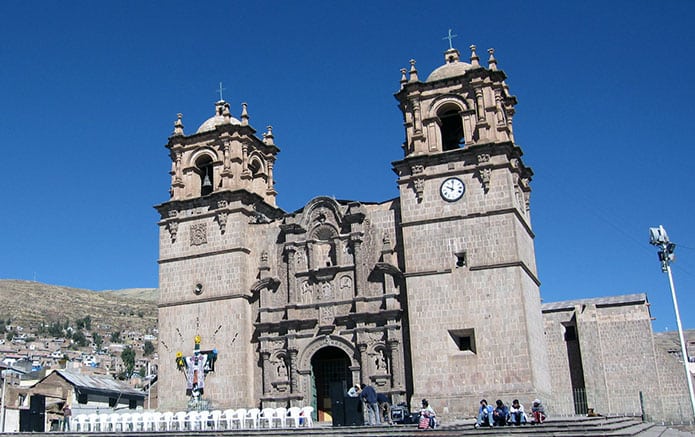
Puno: Folklore Capital of the Americas
Puno lies on a bay on the western shore of Lake Titicaca, surrounded by the Machallata, Azoguini, Pirhua Pirhuani and Cancharani hills, at about 3,827 m (12,556 ft) above sea level. Its main festival is dedicated to the Virgen de la Candelaria and is celebrated in February, with spectacular dance and music competitions. The Festival…
-
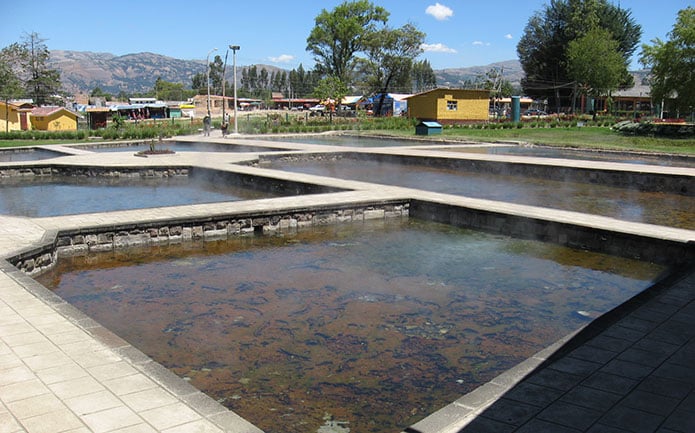
The Baños del Inca (Inca Baths)
The Baños del Inca are located in the district of the same name, 6 km east of the city of Cajamarca, at 2,680 m (8,790 ft) above sea level. The site is famous for its hot springs, which are of volcanic origin and have an average temperature of about 70 °C (158 °F). This is…
-
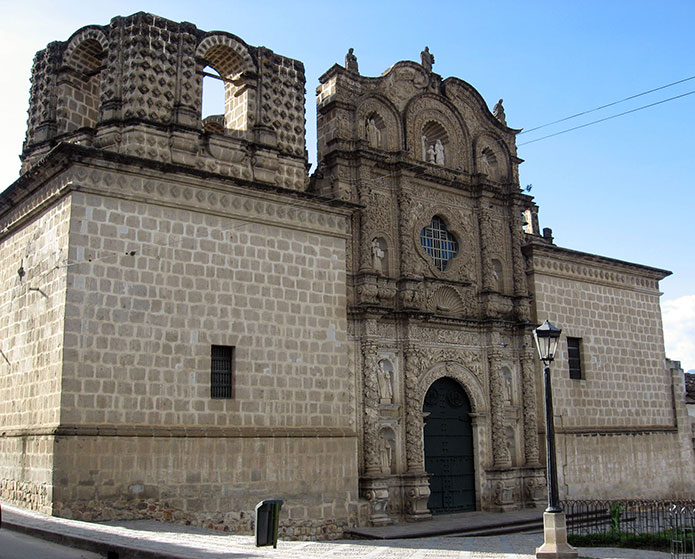
Archaeology and History of Cajamarca
Preceramic Period The first people to inhabit the Peruvian Andes arrived about 20,000 years ago. They lived simply and had to face a natural environment very different from today’s: the coast, for example, was very humid and wooded, and in the highlands the glaciers reached lower altitudes than now. It is still very hard to…
-
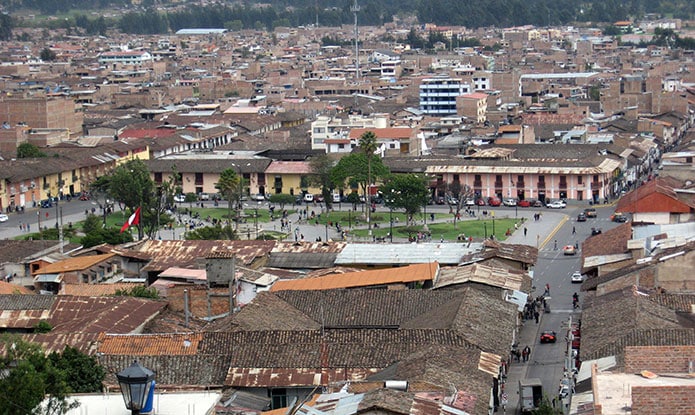
Cajamarca, Capital of Carnival
Cajamarca has a population of about 300,000. Like Arequipa, it is one of the cities with the most farmland, and its countryside is home to the largest cattle population in Peru, so milk and dairy products are among its most important activities. Mining is another source of income, with the Yanacocha gold mine. Cajamarca has…
-
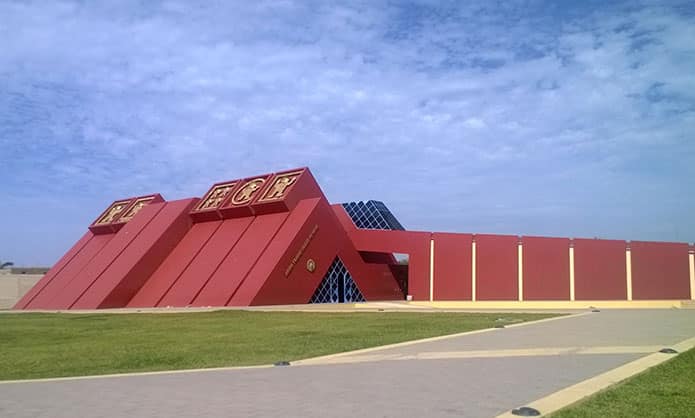
The Royal Tombs of Sipán Museum
The Royal Tombs of Sipán Museum is located in the city of Lambayeque and opened on November 8, 2002. This important museum displays all the treasures found at the archaeological site of Sipán since 1987. Its design recalls the ceremonial architecture of the ancient Moche: its red and ochre-yellow colors and its long access ramp…