
Alfredo Rios
-

Ventarrón
Ventarrón is located in the Reque Valley, in the district of Pomalca, beside the road to Sipán. It was the first temple in the Lambayeque region. It has been dated to 4,000 years ago, making it contemporary with the city of Caral. The site has been studied by Ignacio Alva since 2007. The temple consists…
-

Huaca Chotuna and Huaca Chornancap
The Chotuna-Chornancap Archaeological Complex belongs to the Lambayeque culture and covers some 95 hectares. According to an ancient legend, this is where Naylamp built the first temple, called Chot, in which he placed an idol carved from green stone called Yampallec (the image of Naylamp). Since 2006, research has been carried out here by the…
-

The Peruvian Paso Horse
It is considered the finest saddle horse in the world because it has the smoothest gait. The rider neither bounces nor sways from side to side, but remains almost motionless in the saddle. This was achieved after 300 years of selective breeding, mixing three breeds: the Spanish jennet, the Andalusian and the Friesian. The Peruvian…
-
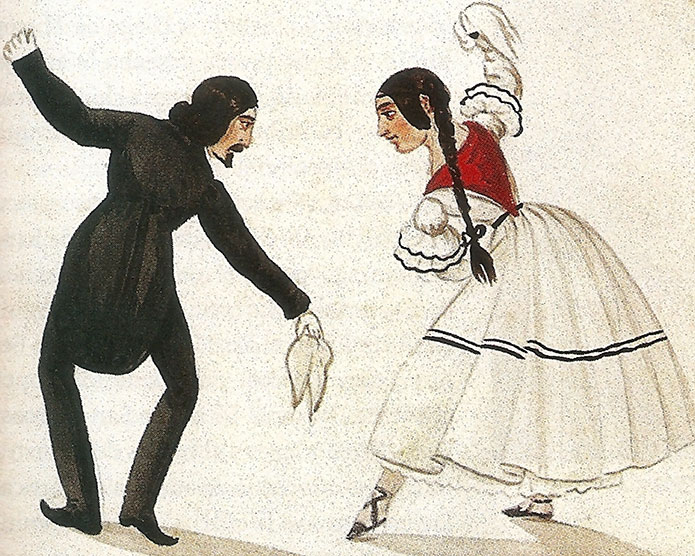
The Music of Peru
Music and dance in Peru go back to the ancient pre-Inca civilizations, although there is no clear record of them, partly because the Incas imposed new traditions on the peoples they conquered. In Inca times, songs and dances such as the uaricza and the puma llama were performed. In colonial times, the French traveler Amédée…
-
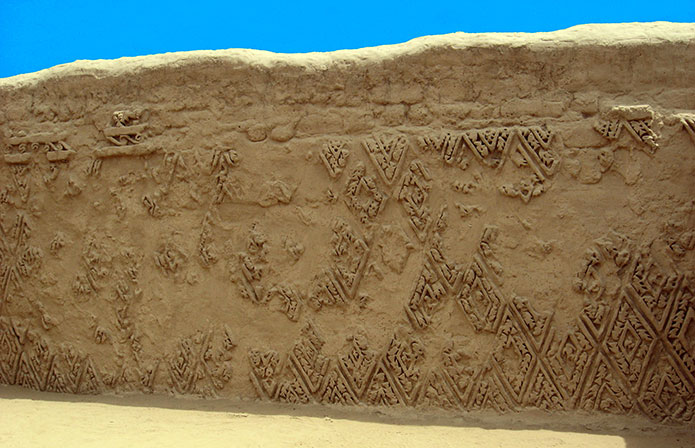
Huaca Esmeralda
It is located three blocks from the church of Mansiche, in the La Esmeralda neighborhood. Its original name is unknown; the current one comes from the farm that once occupied the area. The temple has a rectangular plan of approximately 65 by 41 meters and is made up of two platforms. The first, at the…
-
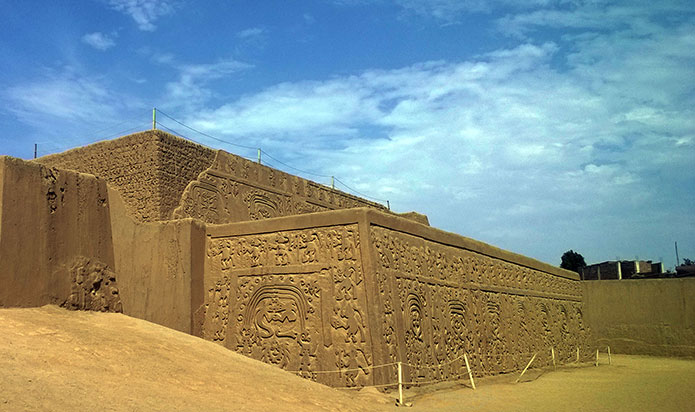
Huaca Arco Iris (Huaca del Dragón)
Located in the district of La Esperanza, beside the Pan-American Highway North, this temple belongs to the Chimú culture. It has been known by different names: Huaca Cientopies (Horkheimer, 1944) and El Dragón, “the Dragon” (Schaedel, 1948). Traces of yellow paint can still be seen on some reliefs, which is why it was also called…
-
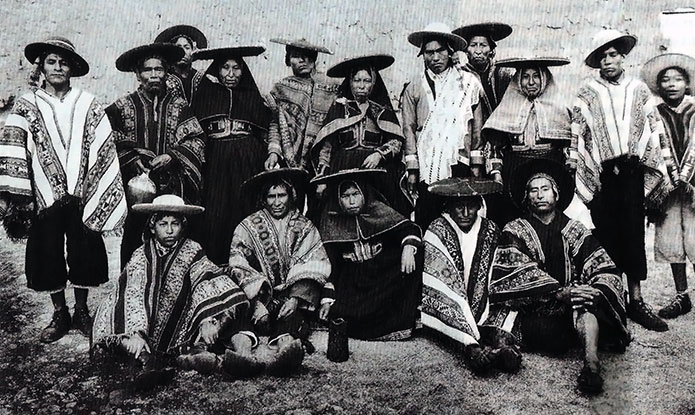
Languages of Peru
Peru has been a multilingual country since pre-Hispanic times. On the north coast, in the area of the Chimú Kingdom, several languages were spoken: Sec (in Tumbes and Piura), the Pescadora language (in Pacasmayo and Guadalupe), Muchic or Yunga (from Motupe to Chicama) and Quingnam (Moche, Virú and Chao valleys). Culle was spoken in Cajamarca,…
-
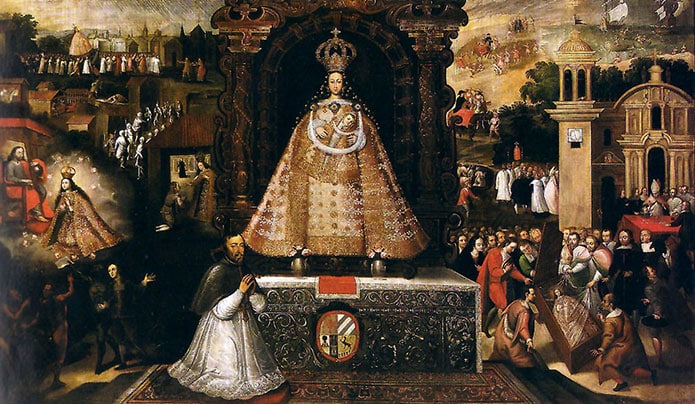
The Cusco School of Painting
The Cusco School flourished in the late 17th century and much of the 18th. Its great promoter was the Bishop of Cusco, Manuel de Mollinedo y Angulo, who arrived in 1673. His project was to rebuild the churches damaged by the earthquake of 1650, which included completely redecorating the cathedral. A characteristic of the Cusco…
-
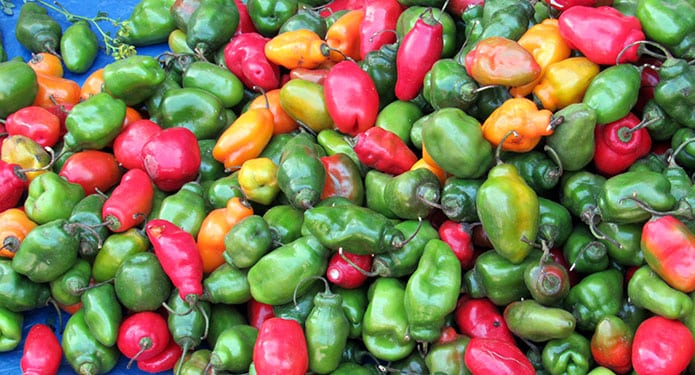
Native Plants of Peru
Many plants domesticated or native to Peru and the Andean-Amazonian region have made a huge contribution to the world’s agriculture and cuisine. This is a list of some of them, with their common names and scientific names. Achiote, annatto (Bixa orellana) Achira (Canna indica) Ornamental achira (Canna glauca) Aguaymanto, golden berry (Physalis peruviana) Ahipa (Pachyrhizus…
-

UNESCO World Heritage Sites in Peru
These are the Peruvian sites inscribed on UNESCO’s World Heritage List, as cultural, natural or mixed properties, with the year of inscription: City of Cusco (cultural, 1983) Historic Sanctuary of Machu Picchu (mixed, 1983) Chavín archaeological site (cultural, 1985) Huascarán National Park (natural, 1985) Chan Chan Archaeological Zone (cultural, 1986) Manu National Park (natural, 1987)…