Trujillo has several museums, both in the city and at its archaeological sites.
MUSEUM OF ARCHAEOLOGY
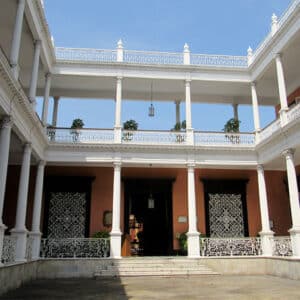
It is the oldest museum in Trujillo. It is housed in Casa Risco, which the government donated to the National University of Trujillo in 1995. The museum shows the cultural development of the north coast from 10,000 BC until the arrival of the conquistadors in 1532.
Jr. Junín 682 – Phone: 474850
Monday to Saturday: 9:00 am to 5:00 pm
Adults: S/ 5.00 Children and students: S/ 1.00
CATHEDRAL MUSEUM
A collection of religious art in the Minor Basilica, or Cathedral. Colonial paintings and sculptures, as well as the catacombs, are the highlights of the visit.
Monday to Friday: 9:00 am – 1:00 pm and 4:00 pm – 7:00 pm.
Saturday: 9:00 am – 1:00 pm
Adults: S/ 4.00 Students: S/ 2.00 Children: S/ 1.00
TOY MUSEUM
A magnificent private collection owned by the painter Gerardo Chávez, with toys from all over the world and from pre-Hispanic Peru. Jr. Independencia 713 – Phone: 044 – 208181
Monday to Saturday: 10:00 am – 6:00 pm.
Adults: S/ 5.00 Children: S/ 2.00
Schedules and prices may change; please confirm before your visit.
Site Museums
MUSEO CAO
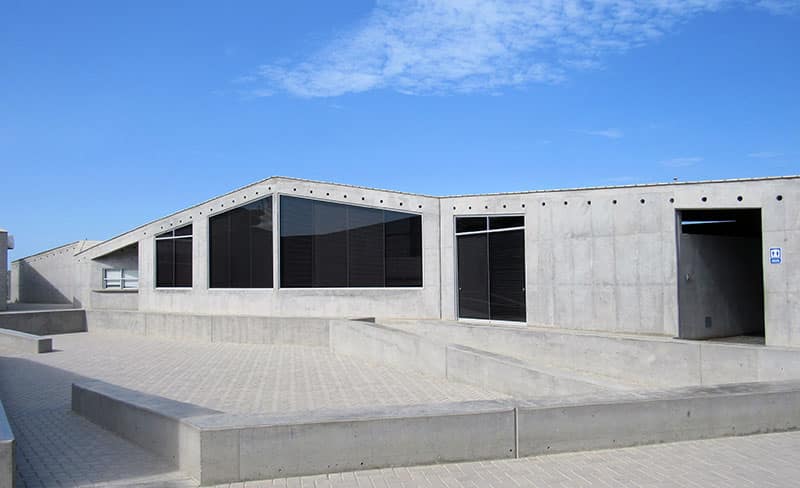
It stands opposite Huaca Cao Viejo. The museum is organized into six themed rooms and uses screens with videos and animations to explain the details of what is on display in each room.
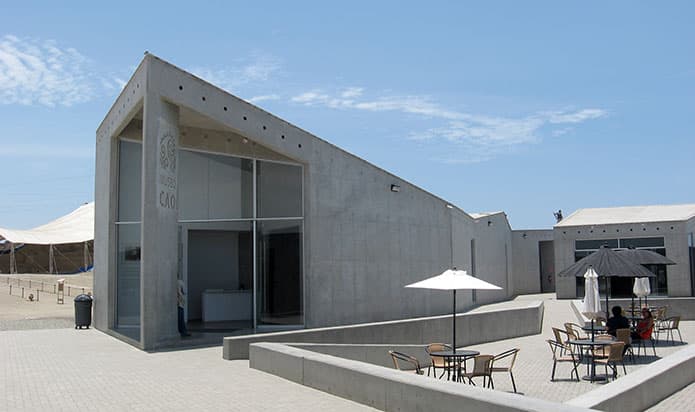
The first two rooms give general information about the archaeological site. Ceramics, carved gourds, textiles and reed baskets, arranged chronologically from pre-Hispanic times to the present, bear witness to the cultural continuity of this part of the Chicama Valley. Colonial objects found in the old chapel built on the plaza of Huaca Cao Viejo are also on display.
The centerpiece of the third room is an impressive wooden idol more than 2 meters tall, used in important rituals and later buried in one of the temple’s rooms.
The fourth room is devoted to Moche human sacrifice. It displays ceramics showing prisoners and victors, as well as a video re-creation of a ritual battle.
The fifth room shows ceramics found in a reused tomb that belonged to an important woman of the Moche elite.
HUACAS DE MOCHE MUSEUM
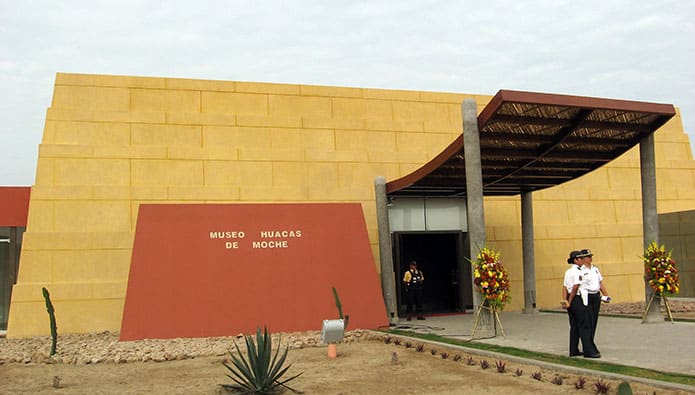
It is located a few meters from the Huaca de la Luna and opened in June 2010. Its architectural design draws on the building traditions of the Moche culture. Inside, it is organized into three themed rooms, and every display case has explanations in Spanish and English.
First room:
It is devoted to the Moche world. The ceramics were chosen to show different aspects of Moche iconography and activities, including 20 pieces with the serpent design and the stepped symbol.
Other ceramics show the fauna of the time and the hunting of deer and sea lions. Religion is represented through elements such as the sacred mountain, ritual races and combats, human sacrifice and sacrificed prisoners.
Second room:
It displays the tombs of the Priest-Warrior, the Shaman, the Lord of the Prisoners, the Blind Priest, the Weaver and a Moche reburial. The ceramic piece that symbolizes the Huaca de la Luna, known as the “Warrior Duck”, has a special place in this room. There are also ceramics showing the importance of coca leaves in ceremonies, with five pieces depicting men chewing coca. The metalwork includes ornaments worn on ceremonial clothing, ear spools and a magnificent gilded copper ornament worn on the back.
Two wooden models from the Chimú culture, found in the ceremonial plaza of the Huaca de la Luna, represent ceremonial plazas at Chan Chan where the ancestor ritual took place. The mummy is made of Spondylus shell.
Third room:
It is devoted to the discoveries made in the Moche city. On display are ceramic musical instruments, figurines, molds and objects used in weaving.
CHAN CHAN SITE MUSEUM
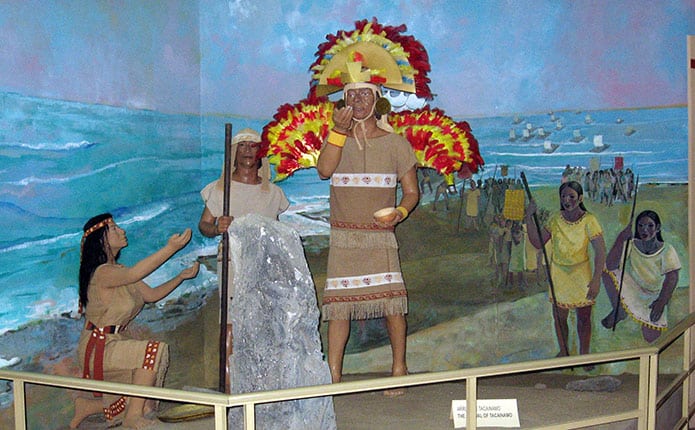
It is located within Chan Chan, beside the road to Huanchaco. The museum displays original objects found at Chan Chan, including wooden idols, ceramics, textiles, metalwork and building materials (adobe bricks, ropes, beams).
Other rooms describe the pre-Hispanic cultural development of the La Libertad region, from the first stone tools to the ceramics of the great Moche and Chimú civilizations. There are also displays on agriculture, with the tools, irrigation techniques and crops of the Moche Valley, and a variety of scale models that give a clearer idea of the shape and use of the citadels and other parts of the city.
Finally, and most interesting of all, the museum has a modern multimedia room that opens to visitors every half hour, where the history of Chan Chan is told with images, lights and sound effects that clearly explain how the city grew.
Advertisement