
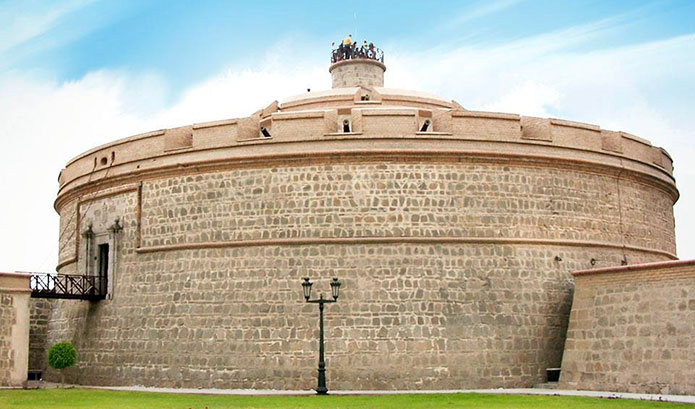
According to historical studies, the port of Callao began operating on March 6, 1537. Pizarro named it Santa Marina; it was later called the Port of the City of the Kings, El Pedregal, El Cascajal, and Callao de Lima.
The name Callao probably comes from a European sailors’ term of Portuguese origin (calhau), referring to a landing bay with a pebble beach. Other scholars argue that it comes from the Quechua callu or callou, meaning the “end” or “point” of a bay. Another possibility is chalaco (from challa or challa ako), meaning straw roof, as used by the ancient inhabitants.
Callao suffered from pirates who raided the port. The first raid was by the Englishman Francis Drake in 1579, followed by the Dutchman Jacques L’Hermite in 1624.
Because of these attacks, the viceroys built a city wall around the port in the 1640s. The earthquake and tsunami of October 28, 1746 destroyed most of the port and its wall. Viceroy José Antonio Manso de Velasco, Count of Superunda, then ordered the construction of a fortress covering 70,000 m², named Real Felipe in honor of King Philip V of Spain. It was completed in the 1770s, under Viceroy Manuel Amat.
In 1952 it was declared a National Historic Monument, and it later became the Army Museum.
Advertisement


