
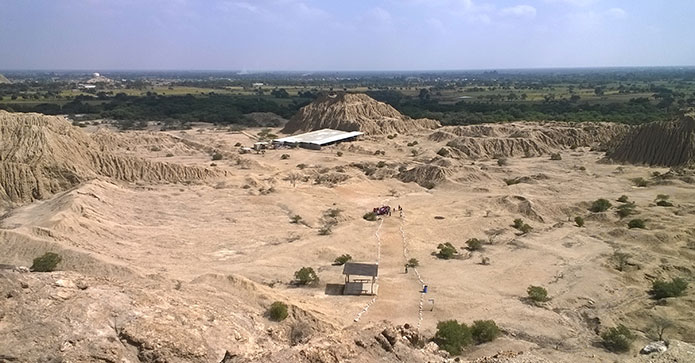
Túcume is located 33 kilometers north of Chiclayo, in the lower valley of the La Leche River. It covers 220 hectares.
Túcume was the second great capital of the Sicán or Lambayeque culture. It is made up of 26 pyramid-shaped buildings around Cerro La Raya, also called Cerro Purgatorio. The most important excavations were carried out between 1988 and 1994, sponsored by the Kon-Tiki Museum of Norway and led by the explorer Thor Heyerdahl, famous for his 1947 raft voyage from the port of Callao to Polynesia.
The excavated huacas provided a wealth of information about burial patterns and the role these buildings played.
HUACA 1
This temple was in use from Lambayeque times until the Inca period. It is a compact platform whose façade had straight-edged high reliefs and designs of seabirds.
HUACA LAS BALSAS
Its name comes from its decoration of rafts and seabirds, nets and other designs related to the sea. Up to seven superimposed building phases have been found.
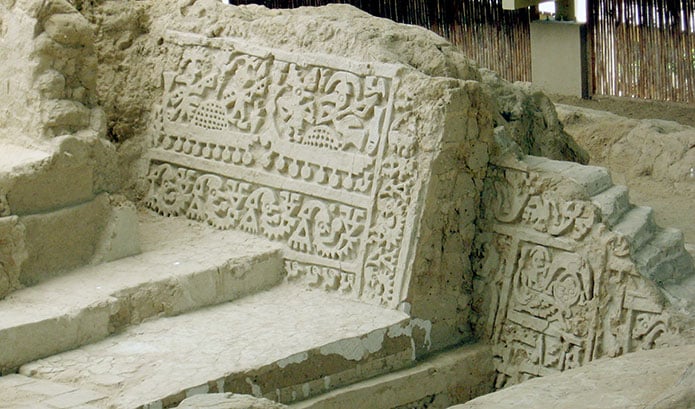
THE TEMPLE OF THE SACRED STONE
This temple was used and respected until Inca times. It was a small enclosure with a single entrance through which only one person could enter. Inside, a stone brought from Cerro Purgatorio was placed. The temple remained in use after the Incas arrived; silver and shell figurines with feather headdresses have been found from this period. The Incas usually made such offerings only to the most important temples, such as the Coricancha in Cusco.
HUACA LARGA
It is 700 meters long, about 280 meters wide and up to 30 meters high. It was not only a religious site: evidence of domestic, administrative and craft activities has also been found.
The Temple of the Mythical Bird is located within Huaca Larga. It dates from the Chimú period and was decorated with designs of diving birds in red, white and black. In Inca times the temple was covered over and four stone rooms were built on top. The walls were plastered with mud but not painted, and the Incas also built some niches. The roof was made of carob wood and cane. An important member of the elite was buried in this temple, probably the Lord of Túcume. He was buried with 19 women weavers and two men who were part of a sacrificial ritual. His most important ornaments were not of gold but of silver (a crown, ear spools and a pectoral). After this burial the temple was filled in and later burned together with the other rooms of Huaca Larga, which suggests a ritual fire.
Advertisement

