
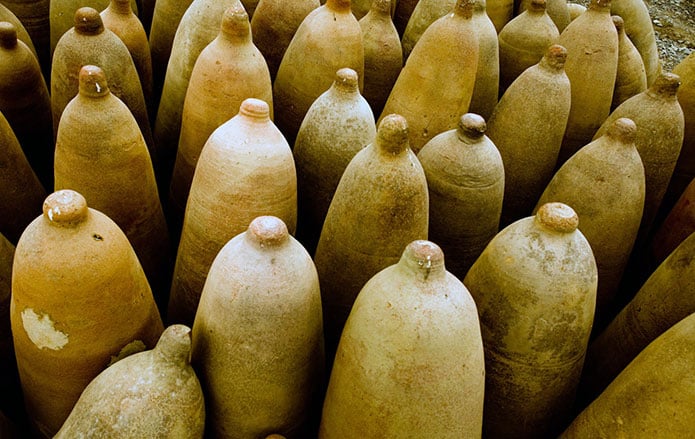
The name “pisco” comes from Quechua and is usually said to mean “bird”. When the Spanish arrived, “piscos” were also the cone-shaped clay vessels used to ferment chicha and other drinks, and Pisco is the name of the port and valley from which the spirit was shipped.
Grape varieties:
1. Non-aromatic: Quebranta, Mollar and Negra Criolla, which produce “pisco puro”, alone or blended.
2. Aromatic: Moscatel, Italia, Torontel and Albilla, which produce aromatic pisco.
About 5 kilos of Quebranta grapes are needed to make a 750 ml bottle of pisco. “Acholado” pisco is made by blending different grape varieties.
Pisco is produced by hundreds of producers, from small artisanal bodegas to large companies, mainly in Ica, Lima, Arequipa, Moquegua and Tacna, the regions covered by the Pisco designation of origin.
By ministerial resolution of May 6, 1999, the fourth Sunday of July was declared National Pisco Day in Peru.
THE PISCO SOUR
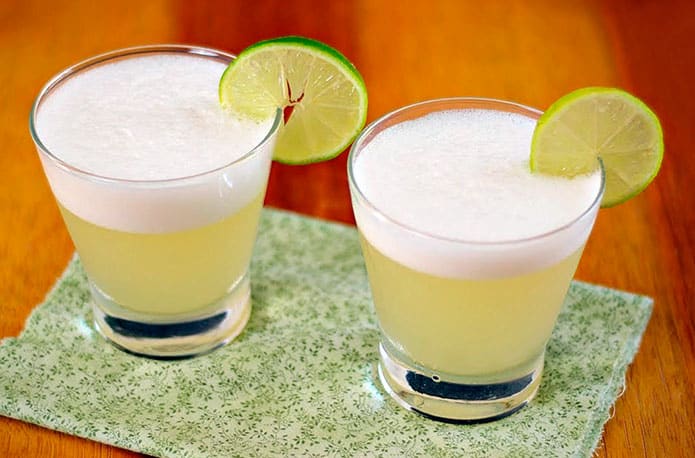
This is Peru’s national cocktail, made mainly with pisco and lime juice. According to researchers, it was created in Lima in the early 20th century by Victor Vaughen Morris, an American immigrant who owned the Morris Bar on Calle Boza, in today’s Jirón de la Unión.
In 2004 the first Saturday of February was declared National Pisco Sour Day.
The classic recipe is known as “3-1-1”: three ounces of pisco, one ounce of simple syrup and one ounce of lime juice, plus a little egg white and ice to taste, all blended or shaken together. It is served with a few drops of Angostura bitters on top.
Advertisement