
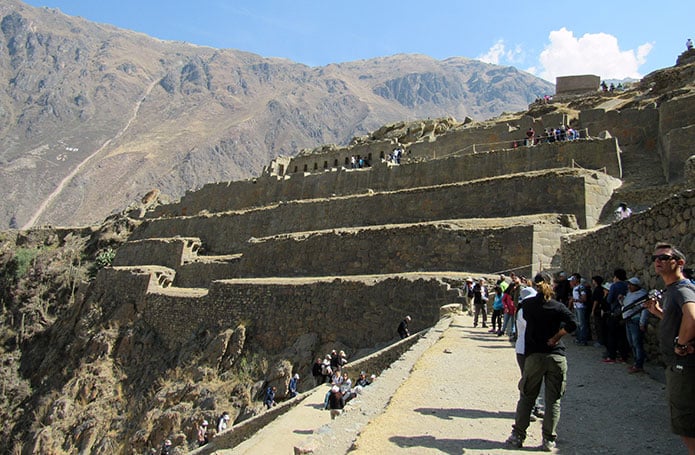
Ollantaytambo is located 80 kilometers from Cusco, at an altitude of 2,792 m (9,160 ft).
Its name honors Ollanta, an Inca chieftain who, according to legend, fell in love with Cusi Coyllur, the daughter of the Inca Pachacutec.
It is made up of terraces that spread across the slopes of a hill, divided in two by a central stairway. Its builders took advantage of the natural defenses provided by the slopes of the Pinkuylluna, Chupacayán and Cachicata mountains.
Ollantaytambo is believed to have been a fortress protecting the entrance to the upper Urubamba Valley.
In the upper part is the “shrine of the ten niches”, all of them trapezoidal.
All around are many blocks of stone that were never finished. Among them is a group known as the Temple of the Sun: six enormous carved and polished blocks of red porphyry. The largest stone is 4 meters high and 2 meters wide.
The site preserves seven monoliths of pink stone, which is not common in this valley. They were brought from the other side of the Vilcanota River, from the Cachicata quarry 7 kilometers away. Moving these huge blocks was a remarkable feat.
Other important buildings are the Royal Hall, or Mañaraki, the Incahuatana and the Princess Baths.
The Inca Garcilaso de la Vega wrote that in Ollantaytambo they buried “the intestines removed to embalm the bodies of the Inca rulers”. Accounts also say that a gold statue representing the deceased Inca was kept here.
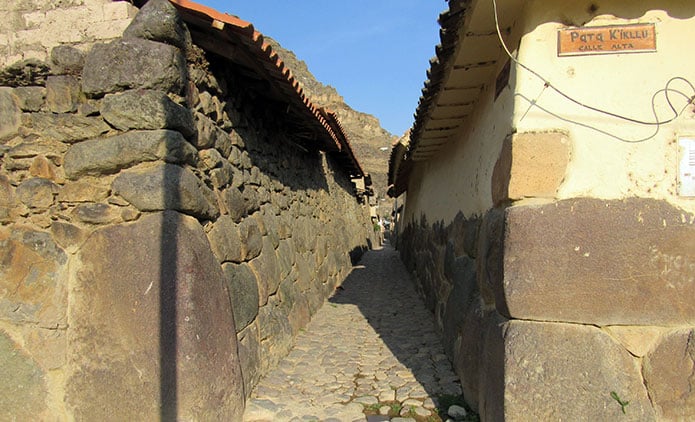
The best-preserved old part of the town of Ollantaytambo lies north of the Hanan Huacaypata square: 15 blocks of houses built on walls of cut stone.
Advertisement


