
Sañap (Muchic): crossroads.
Saña is located on the right bank of the Saña River. It was founded under the name Santiago de Miraflores on November 29, 1563 by Captain Baltasar Rodríguez at the site of Tambo Real, with the authorization of the viceroy Diego López de Zúñiga y Velasco, Count of Nieva. It soon became a prosperous city thanks to its fertile valley and rivaled Trujillo to become the second city of Peru. It was called the “little Potosí” or the “Seville of Peru”, and had 13 churches as well as mansions and small palaces. The chiefs of Reque, Collique, Cinto, Lambayeque, Túcume, Íllimo, Jayanca, Olmos, Ferreñafe and Pácora were under its jurisdiction.
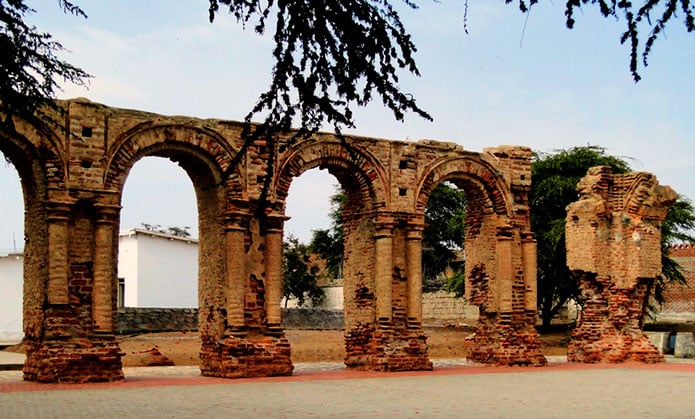
It was sacked on March 3, 1686 by the pirate Edward Davis, who came ashore at the port of Chérrepe with about two hundred men; tradition says the loot was enormous. The city was then devastated by a flood on March 15, 1720, which left the once wealthy city in ruins. Only the remains of the Gothic church of the Augustinians and the convents of the Franciscans, Augustinians, Mercedarians and the Brothers of Saint John of God have survived.
Many Black slaves lived in Saña, and some saw its destruction as divine punishment for the pagan customs the slaves practiced with the consent of their Spanish masters. The leading families then moved to Lambayeque, where they built Neoclassical mansions. Saña is a historic place for the Catholic Church, as Saint Toribio de Mogrovejo died here in 1606.
Advertisement

